2025 Recap: A Record Run of Kenai Sockeye
Looking for the live 2026 Kenai sockeye count? Daily sonar updates are published by ADF&G here.
The summer of 2025 produced the largest return of sockeye salmon to the Kenai River since modern sonar counting began in 1987. By August 19, a staggering 4,252,497 sockeye had passed the Alaska Department of Fish & Game sonar station at river mile 19. This made for some epic Guided Kenai River Sockeye Fishing.
The surge began on July 16 with a daily count of 107,787 fish—and from that point forward the Kenai saw over 100,000 sockeye a day for 21 consecutive days. On three of those days the counts topped 200,000 fish, peaking at an incredible 247,250 on July 27. As your Kenai Peninsula professional fishing guide team, we look back on this record-breaking season as a truly historic event for the river and our anglers.
What Made 2025 Different
The previous record was 2.7 million sockeye in 2010, making this year’s return roughly 57% larger. I have offered guided Kenai sockeye fishing trips since 1990, and I’ve never seen anything like July 2025. The sheer volume of fish moving upriver created conditions that even experienced anglers had to adjust to.
Water temperatures played a role. The Kenai stayed cooler than average through mid-July, which seemed to concentrate the run timing rather than spread it out over several weeks. When the fish arrived, they arrived all at once.
Impact on Fishing Success
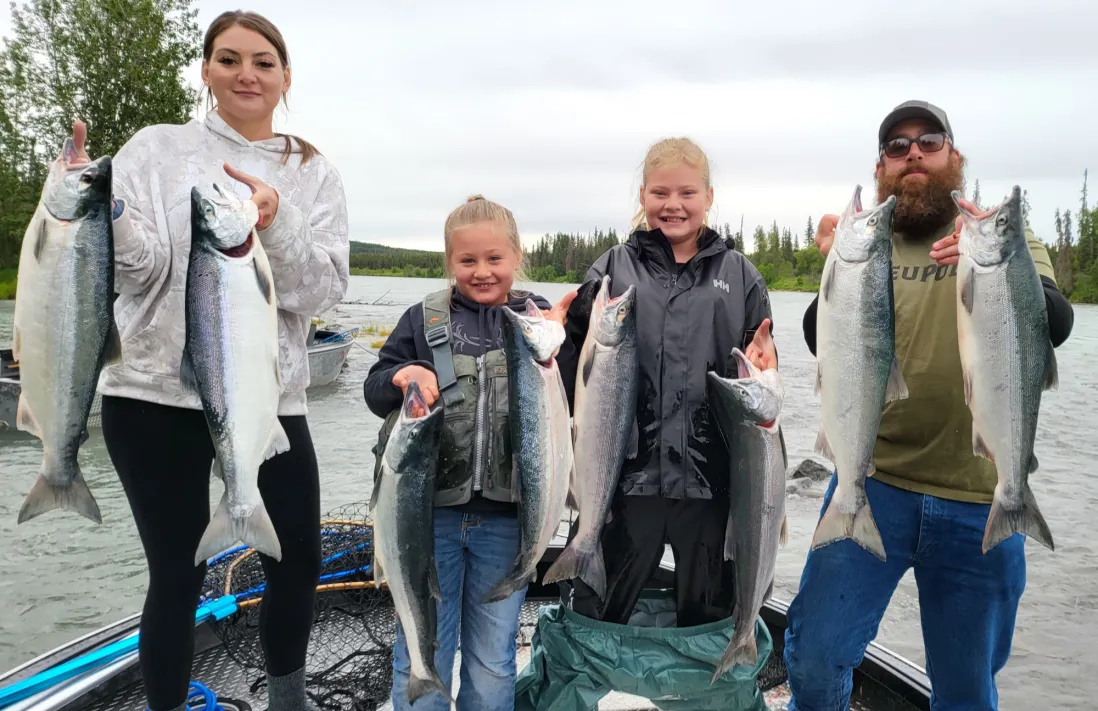
During the peak weeks, anglers targeting sockeye salmon on the lower Kenai River experienced some of the most productive fishing in decades. The Russian River confluence and the section from Bing’s Landing down to Kenai Keys saw consistently heavy action.
The Alaska Department of Fish & Game kept bag limits at six fish per day throughout the run, trusting that the escapement numbers—fish making it upstream to spawn—would remain strong. By late August, those predictions proved accurate.
Run Timing and Technique
The second run of Kenai River sockeye, which typically arrives in mid-July, delivered the biggest numbers. Fly fishing techniques dominated, with anglers using flies in pink, red, and purple patterns. The traditional Russian River approach—casting across current and allowing the fly to swing through schools of migrating fish—worked exceptionally well.
Combat fishing at popular access points reached new levels during the peak days, but anglers who showed up prepared and patient were rewarded. I watched clients land their limits within hours during the final week of July.
Long-Term Implications
Biologists are still analyzing what drove such a massive return. Strong ocean conditions from 2022 to 2024 likely contributed, as did favorable freshwater rearing conditions when these fish were juveniles. Whether 2025 represents a shift toward larger runs or stands as an outlier won’t be clear for several more years.
What is clear: this summer reminded everyone why the Kenai River remains Alaska’s premier sockeye salmon fishery. The abundance, accessibility, and size of these fish—averaging four to eight pounds—created opportunities that anglers from all skill levels could capitalize on.
Mark and Cindy Glassmaker have been married for 28 years, and their business, Alaska Fishing with Mark Glassmaker, has been operating since 1990. Over the past 34 years guiding on the Kenai River, we’ve witnessed many changes. Through early diversification and the dedication of our entire guide staff and team, we’ve built and maintained what we believe is the premier Kenai River fishing experience.
We take great pride in our work and in the reputation our business stands for. Your trip becomes part of that legacy, and we are committed to making it exceptional. Every outing is approached with 100% effort and service, ensuring that your Alaska fishing trips not only meets but exceeds expectations.