Exploring Lake Clark National Park and the Crescent Lake Region
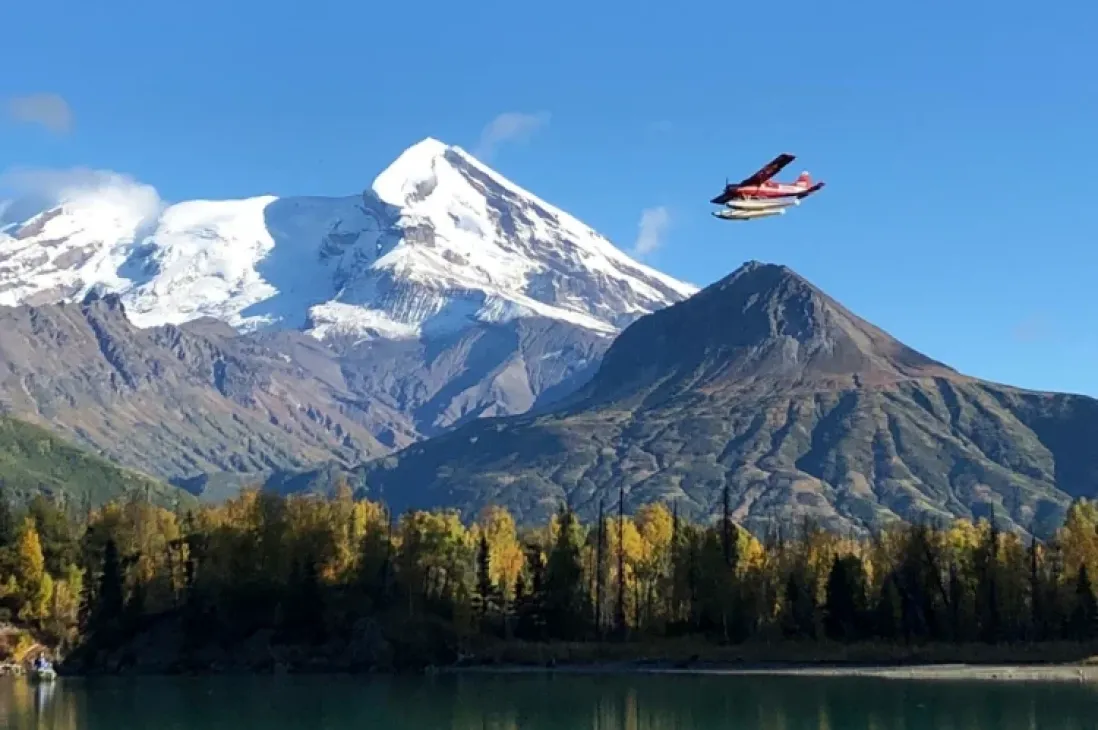
When you fly into Crescent Lake for a day of fishing, you’re landing in one of Alaska’s most spectacular protected wilderness areas. Lake Clark National Park and Preserve encompasses over 4 million acres of pristine backcountry, and the Crescent Lake drainage sits in one of its most dramatic corners—beneath the towering presence of Mount Redoubt.
I’ve been flying guests to this area for over three decades, and I still catch myself staring out the window during that 40-minute flight across Cook Inlet. The landscape tells a story that’s worth understanding before you arrive. As your Alaska backcountry fly-out fishing trips team, we make sure you are fully prepared to experience these remote waters responsibly, ensuring you respect both the rugged environment and the local wildlife populations.
Ready to fish this part of Lake Clark National Park? Mark Glassmaker offers a Crescent Lake fishing trip by float plane from Soldotna — sockeye, silvers, and trout in one of Alaska’s most photogenic fly-in destinations.
Mount Redoubt and the Chigmit Mountains
Mount Redoubt dominates the skyline when you approach Crescent Lake. This active stratovolcano stands 10,197 feet tall and last erupted in 2009, sending ash plumes over 50,000 feet into the air. The mountain sits at the northeastern end of the Aleutian Range, where the Pacific Plate slides beneath the North American Plate, creating the volcanic arc that defines this part of Alaska.
The Chigmit Mountains, where Crescent Lake is nestled, form the spine of the Aleutian Range in this region. These peaks are young in geological terms—still being pushed upward by tectonic forces. The result is the kind of dramatic topography you see when you fly in: sharp ridges, deep valleys, and glacially-carved basins like the one that holds Crescent Lake.
The glacial influence is obvious in the lake’s turquoise-green color. That distinctive hue comes from glacial flour—finely ground rock particles suspended in the water, created when glaciers grind against bedrock upstream. The color shifts depending on the season and how much glacial melt is feeding into the system.
Lake Clark National Park Access and Wilderness Character
Lake Clark National Park has no road access. Not a single mile of highway reaches its boundaries. This is intentional—the park was designated in 1980 specifically to preserve one of Alaska’s most intact ecosystems in its natural state.
The only way in is by small aircraft, typically float planes that land on the numerous lakes scattered throughout the park. This limited access keeps visitor numbers low. While Denali National Park sees over 600,000 visitors annually, Lake Clark typically hosts fewer than 20,000. Most of those visitors arrive for bear viewing at coastal areas like Chinitna Bay or Silver Salmon Creek, not the interior lakes.
This isolation creates the conditions that make places like Crescent Lake so special. The bears you encounter have minimal human contact outside of the brief fishing season. The salmon runs function as they have for thousands of years, undisturbed by development or commercial fishing pressure once they enter fresh water.
The Lake Clark Wild River System
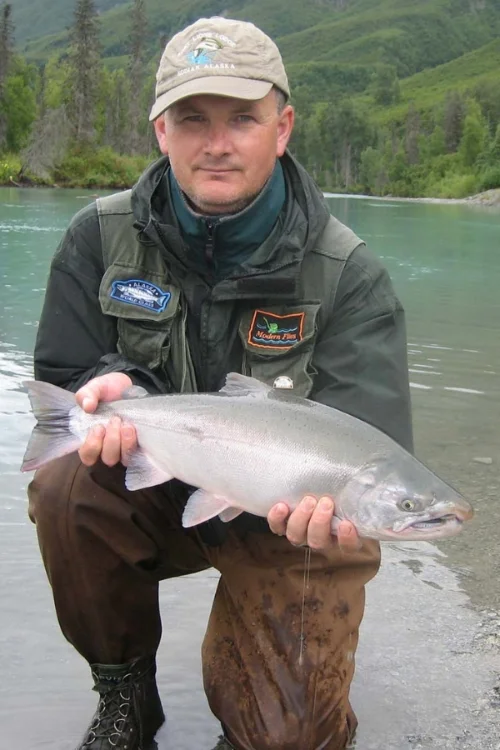 Crescent River is part of a larger network of waterways that drain the western slope of the Aleutian Range into Cook Inlet. The river flows roughly 20 miles from the lake outlet to the inlet, dropping through varied terrain that creates different fishing opportunities at different points.
The upper river—what locals call the Lake Fork—is where we focus most of our fishing effort. This section features the wide gravel flats at the outlet that provide ideal spawning habitat. The relatively gentle gradient here allows salmon to rest and stage before moving upstream, which concentrates fish in a way that makes for productive angling.
Downstream, the character changes. The river picks up speed, cuts deeper channels, and the fishing becomes more challenging. We occasionally work these lower sections, but the upper river consistently produces better results with less effort—an important consideration when you’re on a time-limited fly-in trip.
Wildlife Beyond Bears
Everyone focuses on the brown bears, and rightfully so—they’re spectacular. But the Lake Clark ecosystem supports wildlife diversity that goes well beyond bruins.
Dall sheep navigate the high peaks visible from the lakeshore. Moose browse the willow thickets along the river corridors. Wolves pass through, though they’re rarely seen. The bird life is exceptional—bald eagles are common, trumpeter swans nest on the quieter lakes, and during migration you’ll see everything from arctic terns to various waterfowl species.
This richness stems from the park’s position at a biological crossroads. Marine influences from Cook Inlet meet interior continental patterns. Coastal rainforest transitions to boreal forest. The result is habitat diversity that supports a wide array of species.
Seasonal Changes in the Crescent Lake Area
The fishing season at Crescent Lake runs from June through September, and the landscape transforms dramatically across that window.
June brings long daylight and lingering snow on the higher peaks. The vegetation is just greening up, and the bears are still focused on sedge meadows and early season food sources rather than salmon.
By late July, when the sockeye run peaks, the landscape is in full summer mode. Fireweed blooms across the hillsides, and the bears have shifted their attention to the river.
September brings fall colors that are worth the trip alone. The tundra turns crimson and gold, the bears are at their fattest preparing for denning, and the silver salmon run brings the final burst of activity before winter shuts everything down.
When you book a fly-in trip to Crescent Lake, you’re not just going fishing. You’re entering a protected wilderness that represents Alaska as it existed before development altered most of the accessible places. That context makes every fish caught and every bear sighting more meaningful.
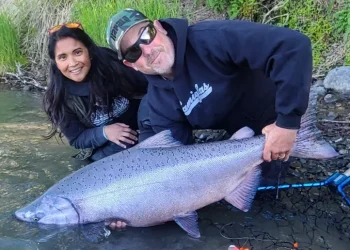
Mark and Cindy Glassmaker have been married for 28 years, and their business, Alaska Fishing with Mark Glassmaker, has been operating since 1990. Over the past 34 years guiding on the Kenai River, we’ve witnessed many changes. Through early diversification and the dedication of our entire guide staff and team, we’ve built and maintained what we believe is the premier Kenai River fishing experience.
We take great pride in our work and in the reputation our business stands for. Your trip becomes part of that legacy, and we are committed to making it exceptional. Every outing is approached with 100% effort and service, ensuring that your Alaska fishing trips not only meets but exceeds expectations.