
How to release fish
Releasing Fish. Do it Right
Whether you intend to catch and release fish or not when you are Kenai River trout and Dolly Varden fishing, knowing how to properly release fish is a good skill for every angler to acquire. You may want to release a fish that is too small to keep, or you may have to release a fish because of size or species regulations. If you plan to catch and release, use barbless hooks, as this makes releasing the fish much easier, and avoid using treble hooks. Also, keep a pair of needle-nose pliers or hemostats handy for quick and gentle hook removal. As your Kenai River fishing guide services team, we emphasize these practices to help ensure the sustainability of our river’s incredible salmon and trout populations.
The first thing to observe is how the fish is hooked. If the fish has swallowed the hook, the best thing to do is cut your line as close to the fish as possible without taking the fish out of the water. The fish has a much better chance of survival if you do this. The fish will likely digest the hook in a week or two. If you must touch the fish for any reason, wet your hands first. This helps to preserve the protective slime on the body of the fish. Failure to wet your hands may result in removing the slime resulting in the fish becoming infected with a fungus or other disease after release.
If the fish has not swallowed the hook, release should be easy. Leaving the fish in the water, use a pair of needlenose pliers to grab the shank of the hook and twist to remove the point from the mouth of the fish. This may take a little effort if the hook is barbed and the hook has penetrated deeply. The fish may do some of the work for you.
If you have an exhausted fish after a long battle and intend to release it, remove the hook, wet your hands, and hold the fish in the current with the head pointing upstream. Grip the fish just above the tail fin and gently push it forward and backward to open the gill plates and aerate the gills. The oxygen in the water should revive the fish after a few moments. Allow the fish to gently swim away of its own volition. Wait for it to seem fully revived especially in heavy current.
A few other items to note:
•If a fish has been accidentally hooked in the fin, back or other portion of the body, remove the hook as quickly as possible trying, not to damage the fish any more than necessary.
•Avoid putting your fingers into the mouth or gills of a fish. This can fatally wound them by breaking a gill or causing other excessive bleeding. Fish also have teeth that can cause injury! The hook could also come out unexpectely in your finger.
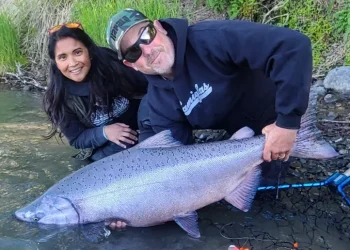
Mark and Cindy Glassmaker have been married for 28 years, and their business, Alaska Fishing with Mark Glassmaker, has been operating since 1990. Over the past 34 years guiding on the Kenai River, we’ve witnessed many changes. Through early diversification and the dedication of our entire guide staff and team, we’ve built and maintained what we believe is the premier Kenai River fishing experience.
We take great pride in our work and in the reputation our business stands for. Your trip becomes part of that legacy, and we are committed to making it exceptional. Every outing is approached with 100% effort and service, ensuring that your Alaska fishing trips not only meets but exceeds expectations.