Kenai River Trout Fishing On Pink Salmon Years
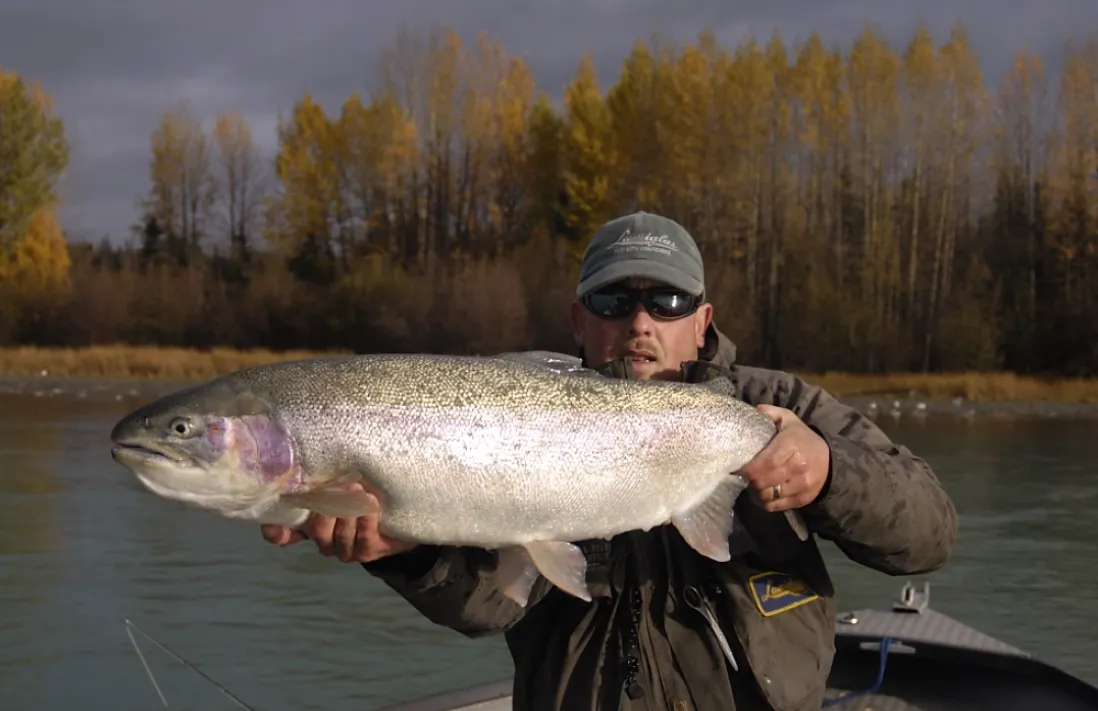
The Kenai River has long been known for trout of epic proportions. With four species of salmon returning in the millions each summer, the trout benefit from an incredible abundance of salmon-based food. It’s no wonder this wild fishery produces some of the largest rainbow trout in the world. Fish in excess of 30 inches are not easy to catch but they are also not uncommon.
What Are “Pink Years” and Why Do They Matter for Kenai Trout Fishing?
You will often hear Kenai trout anglers talk about “pink years” and how they make fall trout fishing even more incredible. Pink salmon on the Kenai primarily return in even-numbered years, and their numbers can be staggering. While not officially counted, estimates commonly place these returns between 2–5 million fish. That’s on top of the annual sockeye run of well over a million fish, all of which contributes to an enormous amount of loose eggs and decaying salmon biomass in the river. To say Kenai trout are well fed is a serious understatement.
With that much food in the system, you might think fooling a wild trout with an artificial would be nearly impossible—and at times, that’s true. In late July, when the river is full of spawned-out sockeye carcasses, trout enter what many anglers refer to as the “glut.” During this period, trout often hold tight to shorelines and back eddies where carcasses accumulate, feeding heavily with little incentive to move. Even a perfectly presented flesh fly or egg pattern can go ignored.
The August Shift: When Trout Move to Spawning Gravel
Typically, within the first week to ten days of August, things begin to change. As the heavy carcass load breaks down and disperses, the feeding dynamic shifts. Trout move away from the shoreline and into the spawning gravel, where the first late-run king salmon begin their push upstream to spawn. Females dig redds while males compete for position, and nearby, well-fed trout stage in anticipation of the next feeding opportunity.
From Flesh to Eggs: The Trout Feeding Transition
After weeks of feeding heavily on decaying salmon flesh, the trout shift from flesh to eggs as their primary food source. As spawning activity increases, millions of loose eggs escape from the gravel and drift through the current, creating a rich and readily available food source that trout key in on aggressively. This transition often marks the beginning of some of the most consistent and exciting trout fishing of the season.
As trout shift their primary focus from feeding on carcass flesh to loose salmon eggs, their feeding becomes much more selective. While it might seem that any single egg pattern drifted below spawning fish would produce, that’s far from the case. Much like traditional fly fishing where success often depends on “matching the hatch,” the same principle applies to egg patterns.
Matching the Egg: Bead Selection and Precision
Careful attention to detail becomes critical. Beads must closely match the size, color, and translucency of the specific salmon species present, as well as the stage of the egg—whether fresh or dead. This level of precision is especially important when targeting larger, more selective trout.
So what makes pink salmon years so special for trout fishing, beyond the sheer volume of additional food? Perhaps the biggest difference isn’t just the amount of food—it’s where that food is available.
Pink Salmon vs. Non-Pink Years: How Spawning Location Changes Everything
In non-pink years, the primary spawn following king salmon is sockeye. Sockeye spawn in relatively limited areas within the Kenai River system, primarily in the upper Kenai above Skilak Lake and in the few miles directly below it. This concentrates trout and feeding activity into those specific zones.
Pink salmon, on the other hand, spawn throughout a much broader section of the river. In even-numbered years, they distribute from just above tidewater all the way upstream to just below Skilak Lake. This widespread spawning activity spreads food resources across a much larger portion of the river, creating more consistent trout fishing opportunities over a greater area.
Dead-Drifting Beads: The Most Effective Technique During Peak Spawn
For whatever reason, Kenai trout feed with their greatest consistency—and often surprising aggression—when the bead bite is at its peak. By dead-drifting precise imitations and placing them naturally within the most productive feeding lanes, anglers eliminate nearly all opportunity for trout to distinguish artificial from real. At that point, fish are simply reacting to the drift, and when conditions align, the action can feel nearly nonstop.
Kenai River Trout Fishing On Pink Salmon Years Stack the Odds for Trophy Trout
While the pink salmon spawn typically peaks within a relatively short two-week window, its overlap with the sockeye spawn—and later the silver spawn—creates an incredibly dense and prolonged food supply. This stacking of multiple spawning events is a powerful equation, and one of the primary reasons pink salmon years consistently produce such high numbers of large trout. Read more about Kenai River Rainbow Trout Fishing Opportunities.
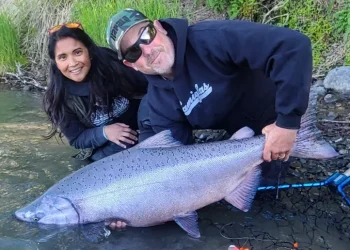
Mark and Cindy Glassmaker have been married for 28 years, and their business, Alaska Fishing with Mark Glassmaker, has been operating since 1990. Over the past 34 years guiding on the Kenai River, we’ve witnessed many changes. Through early diversification and the dedication of our entire guide staff and team, we’ve built and maintained what we believe is the premier Kenai River fishing experience.
We take great pride in our work and in the reputation our business stands for. Your trip becomes part of that legacy, and we are committed to making it exceptional. Every outing is approached with 100% effort and service, ensuring that your Alaska fishing trips not only meets but exceeds expectations.