
Why Bachatna Creek Remains One of Alaska’s Best-Kept Silver Salmon Secrets
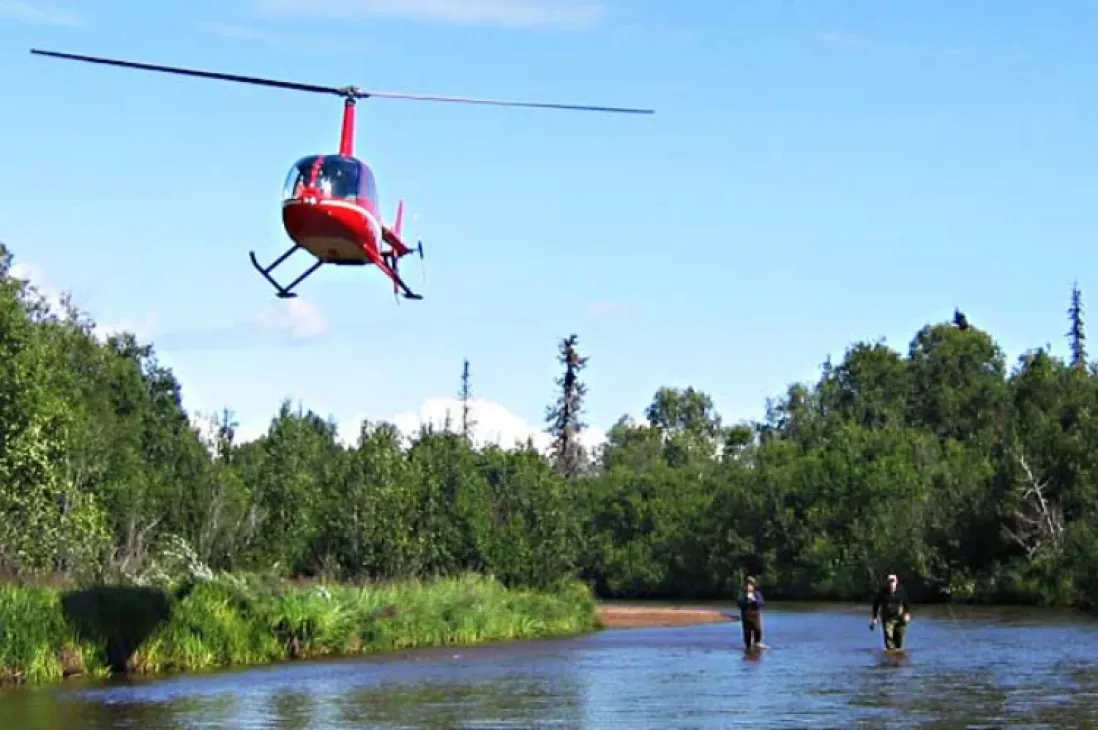
After flying clients into remote corners of Cook Inlet for over three decades, I’ve learned that the best fishing isn’t always found where the crowds go. Bachatna Creek proves this point better than almost any other fly-in destination I know. This small creek on the west side of Cook Inlet doesn’t make anyone’s list of famous Alaska rivers, and most anglers have never heard of it. That’s exactly what makes it special.
The creek sits tucked between Big River and the Kustatan River on the West Foreland, about 20 minutes by floatplane from North Kenai. Unlike the glacial systems that dominate this region, Bachatna Creek draws its water from snowmelt, rainfall, and surrounding tidal marshes. The result is a shallow, sandy-bottomed stream with tannin-stained waters that run clear enough for sight-fishing.
What Makes Bachatna Creek Special From Other Fly-In Destinations
Crystal-Clear Water and Sandy Bottom Create Ideal Fly Fishing Conditions
Most Alaska rivers worth flying to are glacial systems where you’re fishing blind in opaque, gray water. Bachatna Creek is different. The sandy bottom and crystal-clear water let you watch silver salmon move through shallow runs and pick your targets. I’ve had clients spot fish from sandbars and make precision casts to individual salmon holding in shallow water.
This isn’t the kind of fishing where you’re drifting bait and hoping something grabs it. You’re standing on small sandbars, watching chrome-bright silvers push upstream, and presenting flies to fish you can actually see. For fly anglers, it doesn’t get much better.
Fresh Silver Salmon Less Than a Mile From Saltwater
The fish in Bachatna Creek are fresh. The silvers are less than a mile from Cook Inlet when we’re fishing to them, which means they haven’t been in freshwater long enough to lose that bright chrome appearance or their willingness to hammer flies.
I’ve watched clients hook fish on nearly consecutive casts during peak periods in late July and August. The silvers that push into this system seem aggressive in a way that makes for fast action when conditions line up properly.
The Access Challenge That Keeps Pressure Low
Here’s the reality about Bachatna Creek that keeps it from becoming overrun with anglers: getting there is complicated. The creek is too small to land a floatplane on, and there are no nearby lakes large enough for standard floatplane operations. This means access requires either chartering a helicopter or making short hops in a Super Cub on floats to land in beaver ponds near the creek.
Both options work, but they’re more expensive than our other fly-in destinations. Some years, beaver activity creates ponds large enough for our turbine Otter to land, which dramatically reduces costs and makes trips more feasible. Other years, those ponds dry up or the beavers abandon their dams, and we’re back to helicopter access or limited availability.
This unpredictability can be frustrating, but it’s also what keeps fishing pressure minimal compared to more accessible destinations.
Best Timing and What to Expect
Late July Through August for Peak Silver Salmon Action
We offer trips to Bachatna Creek from late July through August, which coincides with the peak of the silver salmon run. Bachatna Creek literally comes alive with silver salmon during this period, and the shallow runs make it ideal for fly fishing.
Weather and Water Conditions Matter
Because Bachatna Creek is fed by rainfall and snowmelt rather than glacial sources, water levels can fluctuate based on recent precipitation. The shallow nature of the creek means it’s subject to varying water conditions. The creek also requires some degree of hiking and wading to fish effectively.
Weather also plays a role in whether we can fly on any given day. We need decent visibility for the 20-minute flight across Cook Inlet, and conditions on the west side can change quickly. I always tell clients booking Bachatna Creek trips to build flexibility into their schedule.
What You’ll Need and Trip Details
Bachatna Creek is a walk-and-wade fishery. While hip boots may be sufficient on some days, we highly recommend bringing chest waders. The sandy bottom is easy to navigate, but you’ll want the flexibility to cross deeper runs and position yourself for the best casting angles.
Your guide will provide spinning gear, but if you want to fly fish, you’ll need to bring your own rod and flies. We do have a limited number of fly rods and waders available by request.
The silver salmon limit at Bachatna Creek is three fish per person, per day. Once you’ve retained your limit, you’re required to quit fishing for the remainder of the day. Given the aggressive nature of the fish here, reaching your limit isn’t usually the challenge.
Trip duration is approximately five hours of fishing time, which provides plenty of opportunity to work the creek and find concentrations of fish. Because access costs vary depending on whether we’re using helicopter, Super Cub, or if beaver ponds allow Otter access, rates change year to year. Call our office for current pricing and to confirm whether Bachatna Creek is accessible during your travel dates.
For anglers willing to work around the access challenges, Bachatna Creek delivers a fly-fishing experience that’s hard to match anywhere in Southcentral Alaska.
Mark and Cindy Glassmaker have been married for 28 years, and their business, Alaska Fishing with Mark Glassmaker, has been operating since 1990. Over the past 34 years guiding on the Kenai River, we’ve witnessed many changes. Through early diversification and the dedication of our entire guide staff and team, we’ve built and maintained what we believe is the premier Kenai River fishing experience.
We take great pride in our work and in the reputation our business stands for. Your trip becomes part of that legacy, and we are committed to making it exceptional. Every outing is approached with 100% effort and service, ensuring that your Alaska fishing trips not only meets but exceeds expectations.